Marching ahead to create the 6G THz Testbed with Orbital Angular Momentum(OAM) &
Multiplexing
Ratnajit Bhattacharjee's research in RF,
facilitated
by a consortium consisting of SAMEER, IIT Madras, IIT Guwahati, and IIT Patna, is
driving India's efforts towards the development of 6G technology. The advancement of 6G
is anticipated to enhance the progress of machine learning and artificial intelligence
by enabling faster data transfer in IoT applications. Know more here.
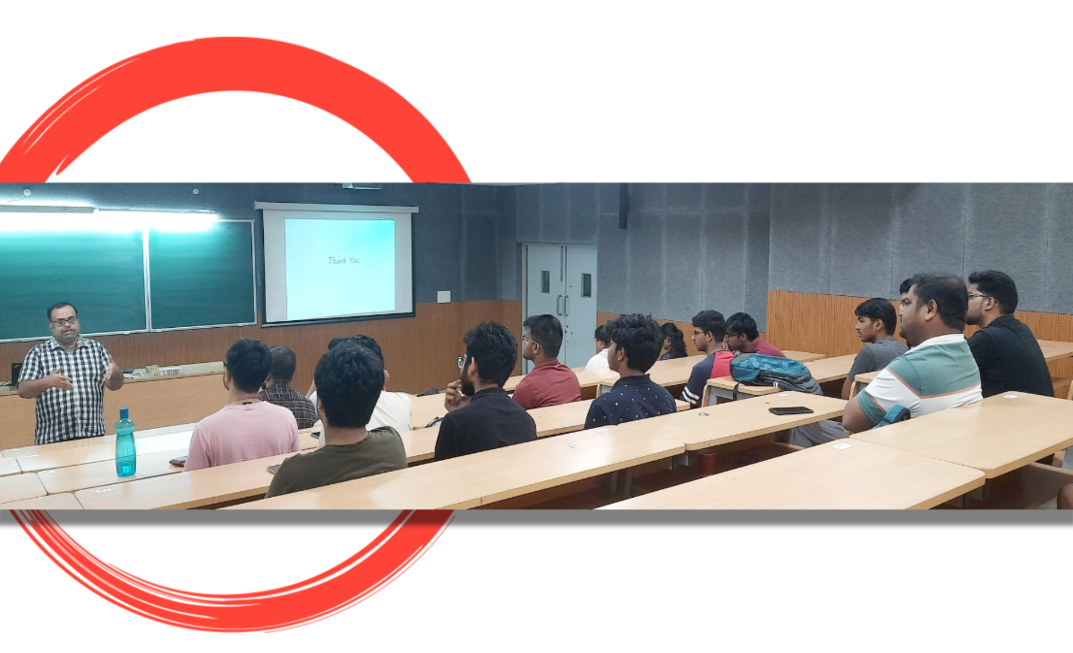
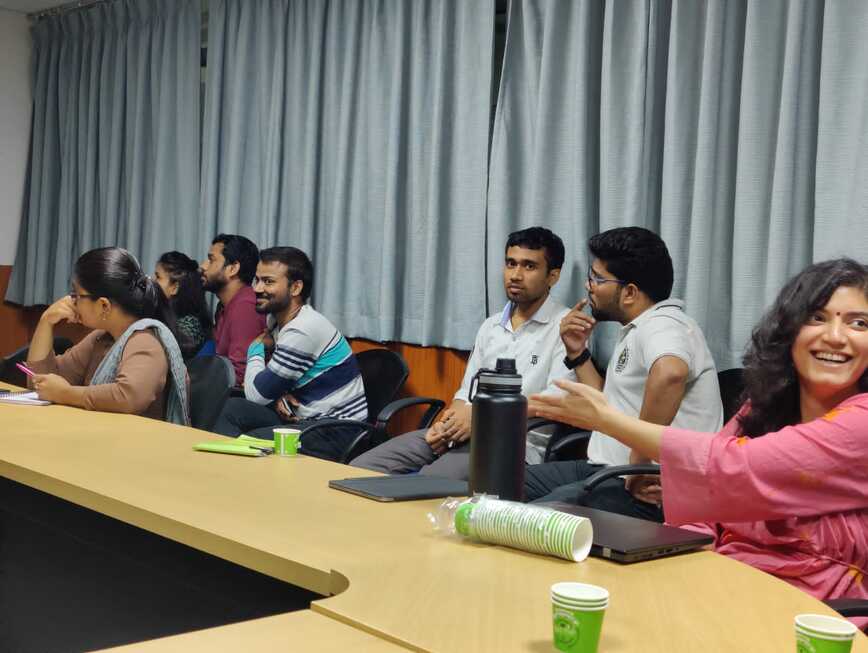
Launch of Talk Series on Chat about Artificial Intelligence (CHAI)
CHAI revolves around engaging discussions about comprehending intelligence, both natural
and artificial, and brainstorming its implications for applications in science and
engineering. The members of the School come together whenever a speaker is arranged,
creating an environment where we listen, exchange ideas, and enjoy a cup of chai
together. Know more here.
Students making us proud
Our UG student members (2021-2025 Batch) - Aditya Gupta, Anant Kacholia, Aryan Lath,
Devansh Bhardwaj, Nischay Nilabh, Subhash Patel, Varun Nagpal and Nityam Pareek
represented IIT Guwahati in the Inter-IIT Technical Meet. The group, with their tenacity to
think beyond the box about complex problem statements, won two gold medals and one
bronze medal, making the institute proud.
Besides this, Anant Kacholia with his two mates, also participated in Nobias
Finance Investment Challenge 2023 and bagged the First prize of 5000 USD!
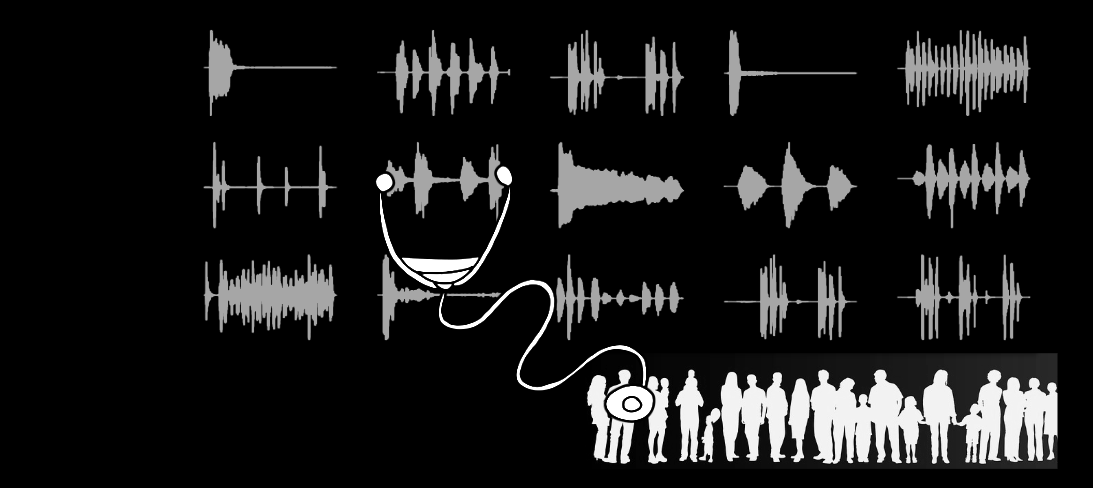
Listening to body sounds: Analyzing respiratory sound signals for design of AI-based
disease screening methodologies
Thanks to improved non-invasive and easy capture of bodysounds using microphones and
developments in data analysis techniques, acoustic epidemiology aided with artificial
intelligence (AI) is gaining attention. In this project, Neeraj Sharma's group will
focus on capture of lung sounds, and explore systematic analysis of these sound signals
using approaches in signal processing and machine learning. The goal is to develop
methods which allow detecting signatures in the sound signals which are associated with
specific kinds of respiratory diseases. Know more about a related work on COVID-19
pursued by the group here
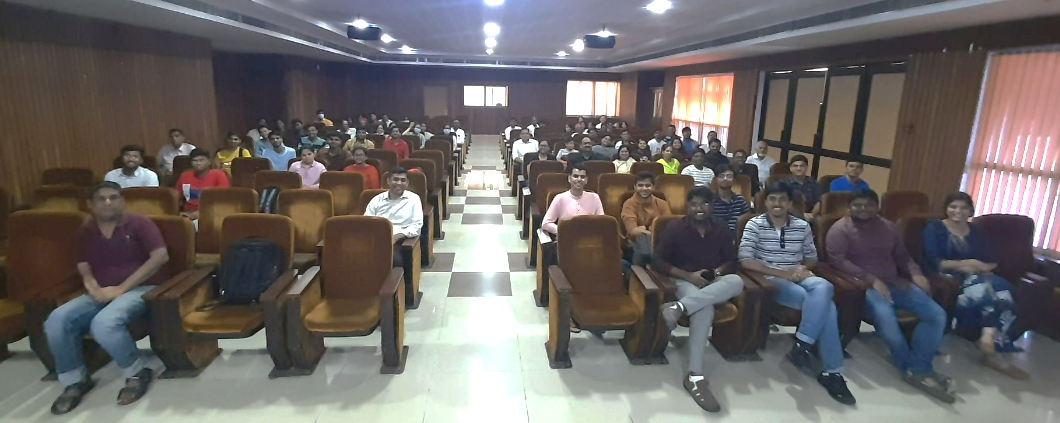
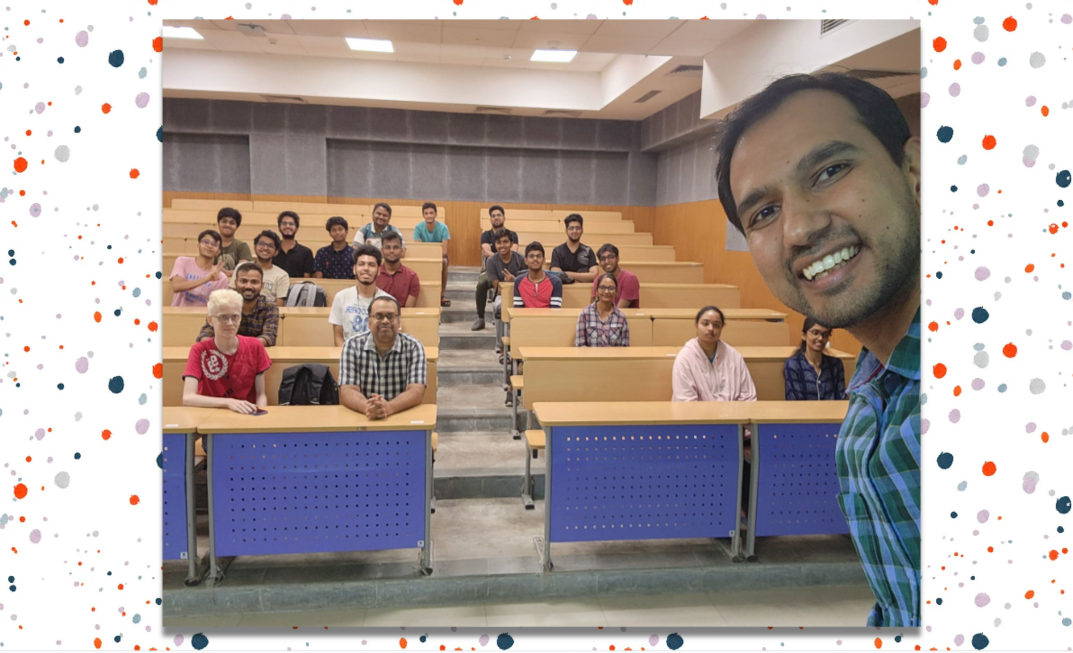
School of DS&AI Welcomes 2022 Batch of BTech Students, Expanding Capacity and Igniting a
Quest for Impact
We are thrilled to extend a warm welcome to the incoming batch of BTech students for the
year 2022 at the School of DS&AI. These students will join us as we collectively strive
to explore deeper and create a positive impact on our world. The new students have come
from various regions across India, having demonstrated their exceptional talents by
excelling in the competitive IIT JEE (All India examination). To familiarize them with
the School and its programs, an orientation meet was organized on 27th October 2022. It
is worth mentioning that this year, the School has expanded its intake capacity from
twenty students in 2021 to thirty students, enabling us to accommodate more aspiring
individuals.
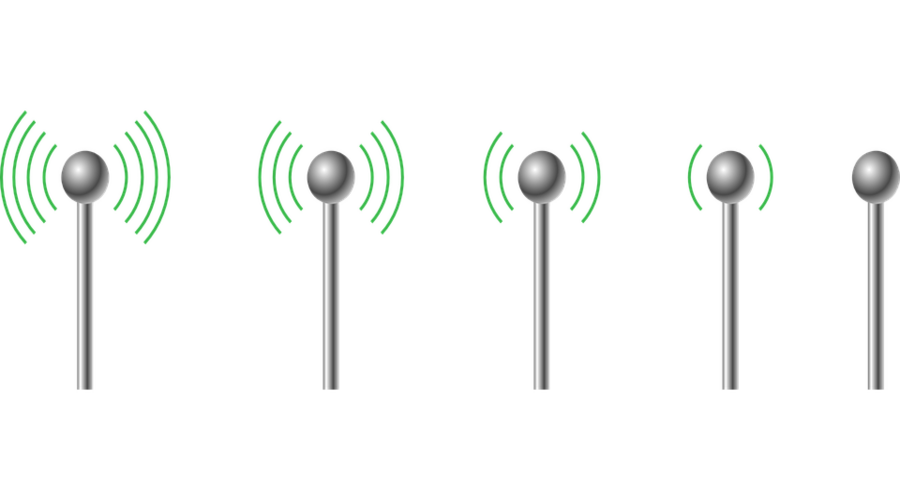
Reinforcement learning for mobile edge computing system
In an Internet of Things (IoT) based network, tasks arriving at individual nodes can be
processed in-device or at a local Mobile Edge Computing (MEC) server. This project, led
by Arghyadip
Roy,
focuses on the optimal resource allocation problem for tasks arriving in an MEC-based
IoT network. To address the high complexities of achieving optimality, the aim is to
develop
low-complexity task scheduling schemes. Additionally, reinforcement learning
(RL) based approaches will be developed that can learn the optimal policy by interacting
with the
environment. The performance of the RL-based schemes will be evaluated in system-level
simulators. More details can be found in this paper on a
related work of ours, and a presentation on the same is available here.
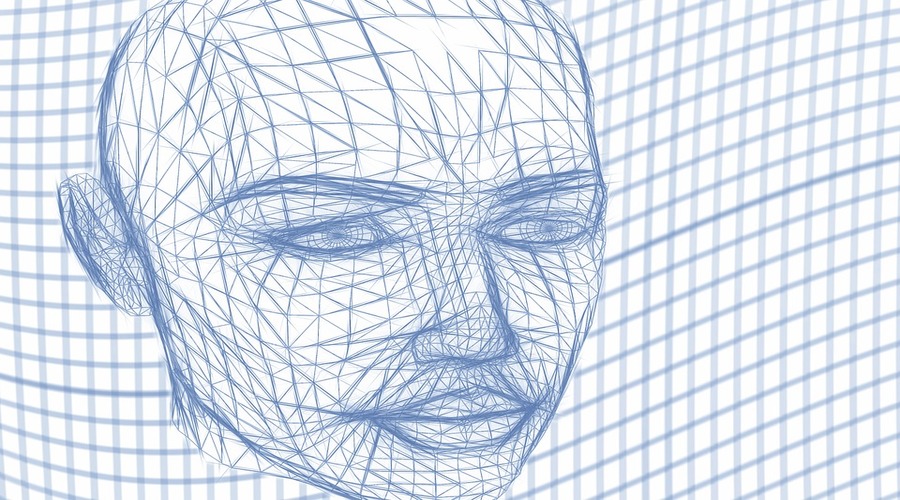
Analysis of facial tissue movements using AI
The eye and facial movements convey subtle
information about the mental state (e.g., attention, intention, emotion) and
physical state (e.g., age, health, fatigue) of a person. These movements, which generate
facial
expressions, are carefully scrutinized by humans in social settings. Debanga Raj Neog's lab is
focussing on developing Artificial Intelligence (AI)-based systems for measuring,
modeling, and animating eye gaze and facial tissue deformations for applications in
healthcare and computer animation. The idea is to use high frame rate vision systems to
capture
human faces, and apply data-driven approaches to analyze and model facial expressions.
In
the healthcare sector, facial movement analysis can be used to develop tools for rapid
assessments of mental health and to build patient-computer interaction systems. In
computer graphics, it can help in creating real-time and hyper-realistic
computer-generated
animations of human eyes and faces in creating convincing and interactive animation
characters. Know more here.
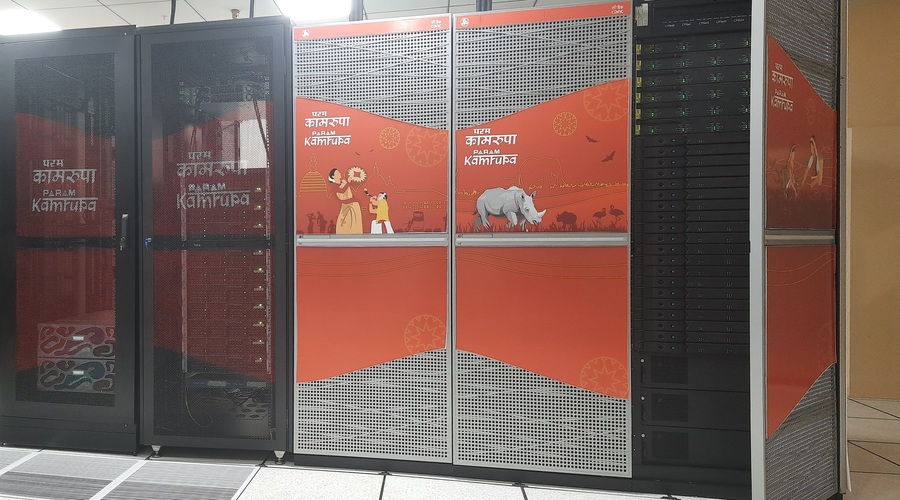
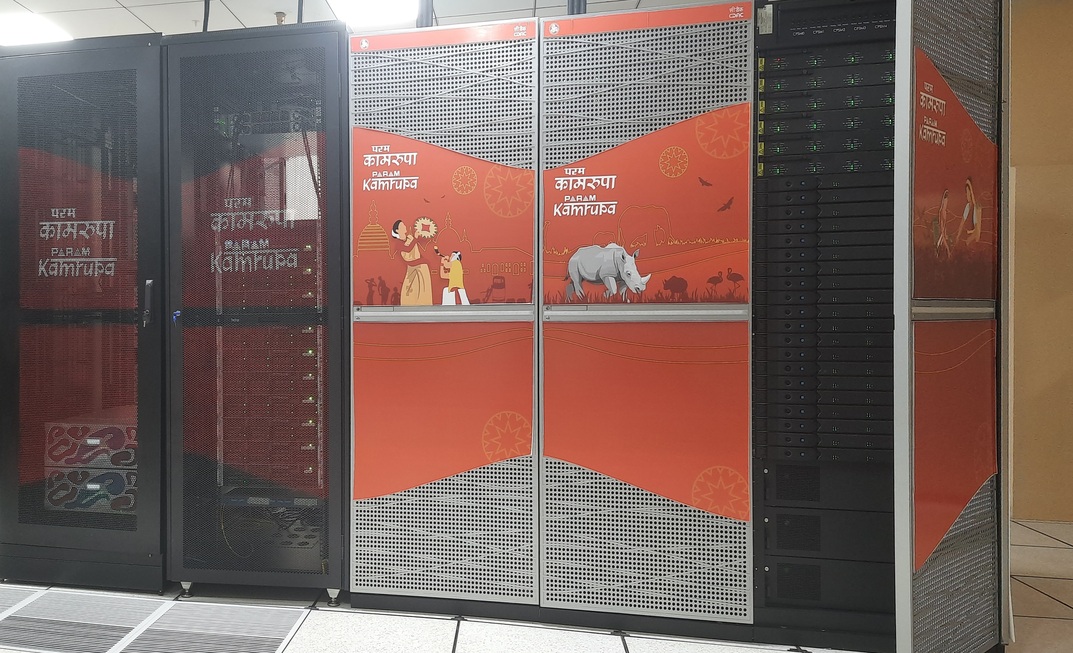
Campus gets another supercomputer
Named "Param
Kamrup", this is a 838 teraFLOPS super computer with 107 CPU nodes, 10 GPU
nodes, 9 high memory nodes, 740 CPU cores, and several CUDA cores. Our data scientists
are getting ready to crunch numbers with these machines!.

 Automating biodiversity monitoring using
soundscapes, by Sarab Sethi on Oct 18, 2023
 Who's that? Person perception from voices,
by Nadine Lavan on Nov 07, 2023